 bootsgrid
In the rapidly evolving landscape of eCommerce, businesses are constantly seeking ways to improve site performance, enhance customer experience, and stay competitive. One approach that’s gaining significant traction is headless commerce — a flexible architecture that decouples the frontend presentation layer from the backend eCommerce engine. For Magento store owners, headless commerce combined with Magento custom development presents a winning formula for future-ready digital experiences.
Let’s explore how Magento’s powerful backend paired with custom development enables high-performing headless solutions — and why it’s the strategic move for serious eCommerce growth.
What Is Headless Commerce?
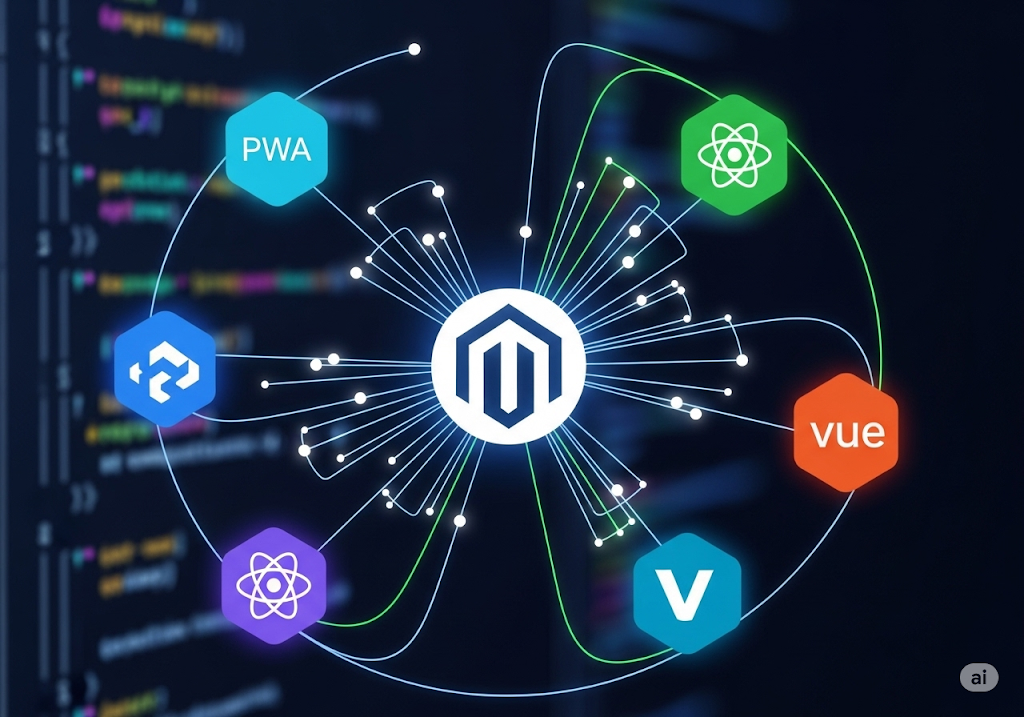
Headless commerce is an architecture where the front-end (the “head”) of your eCommerce site is separated from the back-end logic and data management. This means you can use technologies like React, Vue.js, or Next.js for your storefront while Magento continues to power your product catalog, checkout, customer data, and order management.
This separation offers flexibility and control over how your content is presented and allows you to deliver seamless omnichannel experiences.
Why Magento Is Ideal for Headless Commerce
Magento has long been praised for its flexibility, scalability, and robust set of features. As a backend platform in a headless architecture, Magento excels because:
- It has a strong API structure (REST and GraphQL)
- It supports multi-store and multilingual environments
- It’s open-source, which makes it highly customizable
- It integrates seamlessly with PWA (Progressive Web App) technology
When you pair Magento with a custom frontend framework, your team gains full control over the user interface — without compromising backend performance or security.
The Role of Magento Custom Development in Headless Architecture
Magento doesn’t come with a ready-to-use headless setup. To implement this architecture successfully, you’ll need Magento custom development tailored to your business goals and technology stack.
Here’s what custom development can help you achieve in a headless Magento setup:
- Custom APIs for Specialized Needs
Whether it’s integrating third-party CRM, shipping platforms, or AI recommendation engines, custom APIs enable your store to remain agile and interconnected. - Frontend Freedom with Modern Frameworks
Developers can build ultra-fast, responsive, and engaging frontends using JavaScript frameworks like Vue.js or React — with Magento powering the backend. - Tailored Checkout Experiences
With Magento custom development, you can build checkout flows that suit your customer base — from single-page checkouts to progressive steps with upselling. - Content-Rich Storefronts
CMS features from platforms like WordPress or Storyblok can be integrated with Magento to manage content and blogs, giving you a rich omnichannel experience.
Benefits of Headless Magento with Custom Development
- Blazing Fast Performance
By decoupling the frontend, pages load faster, transitions are smoother, and performance is optimized across devices. This speed boost significantly improves user experience and SEO rankings.
- Omnichannel Possibilities
Headless architecture makes it easier to push content to multiple frontends like mobile apps, POS systems, digital kiosks, or IoT devices — all powered by the same Magento backend.
- Enhanced Personalization
Using data-driven modules and APIs, stores can serve personalized content and product suggestions in real-time without overloading the Magento backend.
- Scalability & Flexibility
Businesses can scale or change their frontend technologies without touching the backend — future-proofing their investments and ensuring long-term growth.
Essential Magento Modules for Headless Commerce
The right Magento modules can supercharge your headless setup. While the frontend may be custom-built, your Magento backend still needs to be robust and feature-rich. Some key module categories include:
- API Management Modules – to create, customize, or enhance data endpoints
- Checkout Customization – to tailor the buying journey
- Inventory Management – for real-time stock syncing across channels
- Performance Optimizers – for caching, lazy loading, and database tuning
Working with a reliable Magento modules company can ensure that the modules you choose are headless-compatible and optimized for your store’s scale and complexity.
Choosing the Right Magento Extensions for Headless Commerce
Magento’s extensibility is one of its core strengths. However, not all Magento extensions are built with headless compatibility in mind. Look for extensions that:
- Expose functionality via APIs
- Are GraphQL-ready
- Do not rely heavily on Magento’s default frontend
- Are maintained and frequently updated
You can find such tools from the Magento Extension Marketplace, but be selective. Many outdated or poorly developed extensions can slow down your system or create security vulnerabilities.
The Role of a Magento Modules Company in Headless Implementation
If you want a truly seamless headless experience, you’ll need the support of an experienced Magento modules company. These companies specialize in:
- Developing custom modules tailored to your store’s headless setup
- Ensuring compatibility with modern frontend frameworks
- Offering support, updates, and security patches for their tools
- Providing integration assistance for payment, shipping, or marketing APIs
By partnering with a company focused on high-quality module development, you reduce risks and accelerate the success of your headless commerce implementation.
Migrating to Headless? Partner with a Magento Migration Agency
Transitioning from a traditional Magento setup to headless is not a plug-and-play change. It requires careful planning, data migration, module re-evaluation, and frontend/backend integration. This is where a Magento migration agency can help.
Such an agency can assist with:
- Safe data migration (customers, orders, products)
- Rebuilding the frontend using a headless approach
- API testing and optimization
- Legacy module analysis and replacement
- Quality assurance and performance testing
With their expertise, your migration to headless becomes streamlined, secure, and scalable.
Magento Custom Development Use Cases in Headless Commerce
To better understand the real-world value, here are a few custom development use cases:
- B2B Portals
Custom dashboards, pricing rules, and user roles for complex B2B transactions can be built with Magento’s backend while using React.js for a modern frontend interface.
- Multi-Vendor Marketplaces
A marketplace can have custom vendor panels, review systems, and commission structures powered by Magento while maintaining a unified frontend UI for buyers.
- Subscription-Based Stores
Magento doesn’t offer native subscription support. But with custom development, you can build APIs and recurring billing integrations while maintaining a fast, modern frontend.
- International Stores
Custom language switchers, currency converters, and region-specific promotions can be integrated smoothly using Magento’s backend logic and a region-aware frontend.
Future-Proofing Your Magento Store
With the eCommerce world leaning toward microservices, headless commerce is not a trend — it’s the new normal. Magento custom development ensures that your store isn’t locked into rigid systems and can evolve as technology changes.
Whether you’re launching a PWA storefront, integrating voice commerce, or deploying AR/VR experiences — Magento gives you the backend power to do it all.
Conclusion
Headless commerce opens the door to faster, more flexible, and more engaging eCommerce experiences. When combined with custom Magento development, it becomes a powerhouse solution for businesses that want full control over both performance and presentation.
From API integrations to frontend freedom, Magento offers the robustness you need — and with the right partners like a Magento modules company or Magento migration agency, you can achieve seamless, scalable growth.
If you’re still using a traditional Magento frontend, now might be the perfect time to explore headless options. Evaluate your current tech stack, identify frontend pain points, and consider how custom development can unlock your brand’s full potential.
The future of eCommerce is fast, flexible, and headless — and Magento is ready to power it.