 bootsgrid
Understand how Magento modules enhance your store performance and flexibility
Running a successful online store means having a platform that can grow, adapt, and meet the evolving needs of your customers. For Magento store owners, one of the most powerful ways to achieve this flexibility is through Magento Modules. These modules act as building blocks that expand your website’s capabilities, allowing you to add new features, customize workflows, and improve the overall shopping experience.
In simple terms, Magento modules are like apps that plug into your store. They can handle a wide range of tasks from managing payments and improving SEO to enhancing product pages and streamlining shipping. Understanding how these modules work and how to choose the right ones can make a huge difference in your store’s performance and sales growth.
Step 1 Know what Magento modules really are
A Magento module is a set of structured files that extend or modify the core functionality of your store. Each module can work independently or together with others, giving you complete control over your store’s customization. These modules can be installed directly or developed specifically for your business needs.
For instance, you might add a module that automates order confirmation emails, another that introduces product comparison tools, or one that enables faster checkout. Together, they form a unique system that matches your business model perfectly.
The biggest advantage of using modules is that they keep your store flexible. You can upgrade or replace them as your requirements evolve without disturbing the rest of your website structure.
Step 2 Why store owners rely on Magento extensions
Store owners often look for modules available in the Magento Extension Marketplace, a dedicated platform offering thousands of solutions for different business goals. Whether you want to improve product management, add marketing tools, or integrate third-party systems, there is always an extension that can help.
The marketplace gives you access to both free and premium extensions verified for security and quality. Many of these are developed by professional developers or certified partners, which ensures stability and compatibility with different Magento versions.
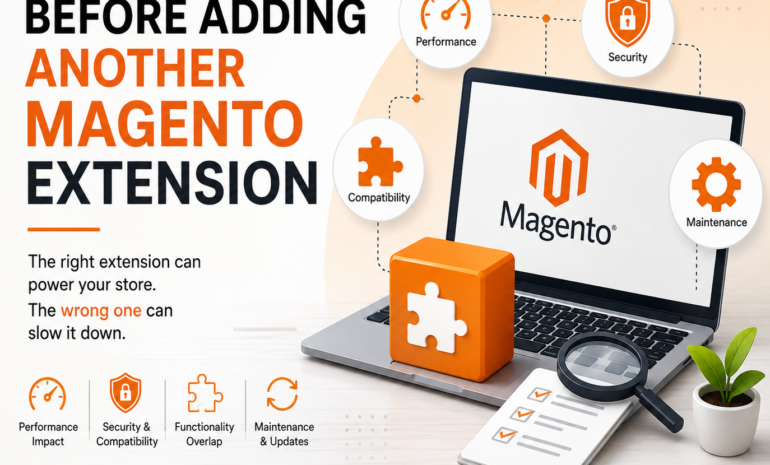
However, while installing ready-made extensions might seem easy, it is always important to test them carefully. Sometimes, using too many extensions from different sources can cause conflicts or slow down your site. The smart approach is to choose only the ones that truly add value to your store operations.
Step 3 The importance of a Magento Modules Company
A professional Magento Modules Company plays a crucial role when it comes to choosing, installing, and customizing extensions for your business. Instead of trying to manage everything on your own, working with experts ensures that each module integrates perfectly with your store’s structure.
These companies not only help you identify the right modules but can also develop custom ones based on your exact business logic. They understand how different modules interact with each other and how to avoid technical conflicts. Their experience allows your store to stay optimized while still being feature-rich.
Moreover, hiring a trusted partner can save you hours of trial and error. They can also monitor updates, patch issues, and ensure your modules are always running with the latest Magento version.
Step 4 When custom Magento development becomes essential
Every eCommerce business has unique goals and challenges. Sometimes, the modules available in the marketplace might not fully match your requirements. In such situations, Custom Magento Development becomes the ideal choice.
Through custom development, you can create modules that address specific business needs. For example, you might need a unique product configurator for your niche industry, or a loyalty system that rewards repeat customers in a particular way. Custom modules help you build such tailored solutions without relying on generic templates.
These developments are also designed to maintain your store’s scalability and performance. A well-built custom module integrates smoothly into the existing system and ensures that every function aligns with your business flow.
Step 5 The role of Magento custom development in business growth
As your store grows, new challenges appear. You might want to integrate multiple sales channels, manage bulk product imports, or add automated customer segmentation. This is where Magento Custom Development really proves valuable.
It helps you optimize every corner of your online store, ensuring that your website remains stable even as you add complex functionalities. Custom development can enhance everything from checkout experience to backend analytics, helping you make data-driven decisions.
Investing in this kind of development is also a long-term strategy. Instead of depending on multiple third-party extensions that might conflict, you have solutions built precisely for your setup. This results in faster performance, higher security, and smoother customer journeys.
Step 6 Why a Magento migration agency can be your best ally
When your business is growing, you might decide to upgrade from Magento 1 to Magento 2 or move from another platform altogether. This process can be tricky, and that is where a Magento Migration Agency becomes essential.
Such an agency ensures that your data, products, customers, and order history are safely transferred to your new setup. They handle everything from database restructuring to module compatibility checks, making sure your store remains fully functional during and after migration.
Migration experts also help retain your SEO rankings and ensure that all extensions are properly configured in the new environment. The process requires precision, as even a small mistake could impact sales or customer experience. Having professionals manage it ensures a smooth transition without losing valuable data or functionality.
Step 7 Selecting and managing the right modules for your store
Choosing the right Magento modules requires a balance between functionality and performance. You should start by identifying the key areas where your store needs improvement. For instance, if your checkout process is lengthy, look for a module that simplifies it. If product management is time-consuming, find one that automates bulk updates.
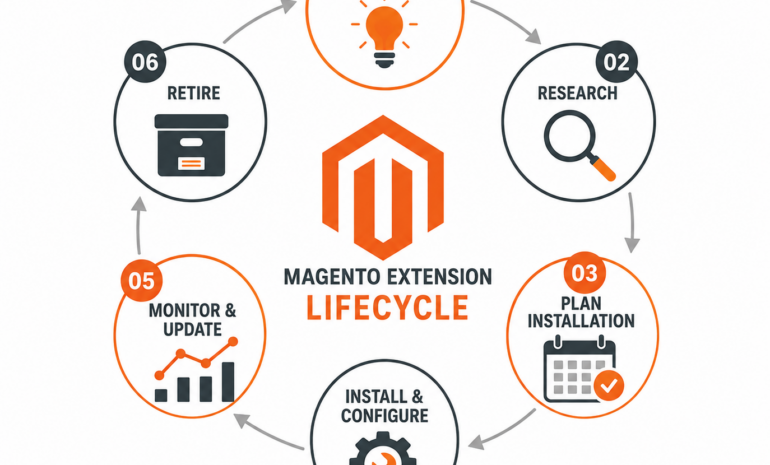
Before installing any module, always check user reviews, ratings, and compatibility details. Ensure that it supports your Magento version and is regularly updated by its developer. It is also wise to install new modules on a staging site first to test them before applying to your live store.
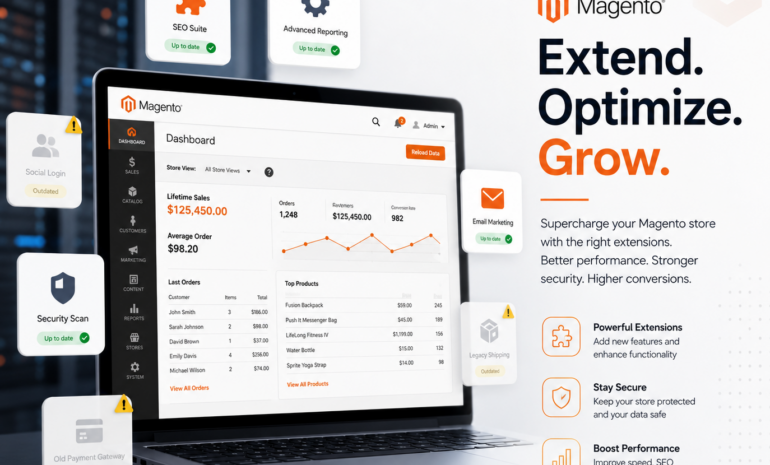
Another important step is keeping your modules up to date. Outdated modules can lead to performance issues or security vulnerabilities. Schedule regular maintenance to update and optimize your module setup.
Step 8 Benefits of using Magento extensions wisely
When used strategically, Magento Extensions can completely transform your online business. They can improve site speed, enhance user experience, and automate many backend operations. With the right combination of modules, you can create a store that not only looks professional but also delivers exceptional performance.
Here are some key benefits that store owners experience
- Improved operational efficiency through automation
- Better conversion rates due to enhanced checkout flow
- Increased engagement through advanced marketing and loyalty tools
- Seamless third-party integrations for shipping and payments
- Stronger data security and performance optimization
The goal is not to install every module you come across but to use the ones that truly align with your business goals.
Step 9 Future proofing your Magento store with smart module strategy
The eCommerce landscape changes rapidly. New technologies, design trends, and consumer behaviors emerge every year. By using a smart module strategy, you can ensure your Magento store remains ready for these shifts.
Start by auditing your current setup regularly. Remove outdated or unused modules that slow down your site. Replace them with modern, lightweight alternatives that provide better compatibility and performance.
You can also collaborate with your Magento Modules Company to develop scalable solutions that can evolve with your business. This way, you are not just reacting to trends but preparing your store for future success.
Step 10 Bringing it all together
For any Magento store owner, understanding and managing modules is not just a technical task but a business strategy. The right combination of extensions can turn a basic store into a highly optimized eCommerce system. From automation and analytics to custom user experiences, modules empower you to deliver more value to your customers.
Working with professionals such as a Magento Migration Agency or a Magento Modules Company gives you the assurance of stability and precision. And when off-the-shelf solutions do not fit your exact needs, investing in Custom Magento Development ensures that your store remains efficient and unique.
As you continue to grow, treat modules as essential parts of your business engine. Keep them optimized, updated, and aligned with your long-term goals. With a thoughtful approach, your Magento store can achieve higher performance, stronger security, and consistent sales growth.
Final thoughts
Magento modules are not just technical add-ons. They represent the core of your store’s flexibility and innovation. When selected and managed wisely, they empower your business to scale efficiently while providing your customers with a seamless shopping experience.
From choosing quality extensions in the Magento Extension Marketplace to investing in Magento Custom Development, every decision shapes the future of your online success. Take the time to understand each module, plan your development roadmap, and work with trusted experts who can help your Magento store thrive for years to come.